Amazon

China Ecommerce Sellers Turn to Bulk Clearance and Local Warehousing

By JiuFang Logistics
July 9, 2026

What Happened

WELT reported that new parcel rules are expected to push larger Asian ecommerce platforms toward importing goods in bigger batches, clearing them in bulk and distributing them through local warehouses.

The report said this approach could help platforms such as Temu, Shein and AliExpress keep delivery flows moving despite tighter rules on small cross-border parcels.

Why It Matters for Cross-Border Ecommerce

The shift changes the logistics model for China sellers. Instead of sending every order as a direct small parcel, sellers may move more stock through consolidated freight, customs clearance and local fulfillment.

This can reduce per-order delivery friction, but it also requires better forecasting and more upfront inventory planning.

Seller Impact

Sellers should review which products are better suited for local warehouse stock and which can still move as direct parcels. High-volume, predictable SKUs may benefit most from bulk import and local delivery.

Accurate HS codes, product descriptions, customs values and inventory records become more important when goods are cleared in larger batches.

Logistics Outlook

For China-to-USA, China-to-EU, China-to-Australia and China-to-Canada ecommerce, the trend points toward hybrid logistics. Sellers will likely combine direct parcels, consolidated freight and destination-market warehousing to manage cost and delivery speed.

Sources


Amazon Australia Prime Day Extends China-to-Australia Ecommerce Demand

By JiuFang Logistics
July 6, 2026

What Happened

Amazon Australia Prime Day 2026 starts on July 7 and runs through July 13, making it a seven-day sales event. TechRadar reported on July 3 that early deals were already available before the official start.

The event covers categories including electronics, home appliances, beauty, fashion and Amazon devices. Getprice reported that Amazon Australia offers more than 200 million products across more than 30 categories.

Why It Matters for China-to-Australia Shipping

A longer Amazon sale window can stretch demand for ecommerce inventory, especially for sellers sourcing from China. Products tied to tech accessories, home goods, fashion and small appliances often depend on predictable cross-border replenishment before and during major marketplace events.

For China-based exporters and Amazon sellers, the key logistics pressure is timing. Inventory that misses the pre-sale window can lose ranking, sales velocity and delivery reliability during peak traffic.

Amazon Seller Impact

Sellers shipping from China to Australia should review stock levels, transit times and last-mile delivery promises. Fast-moving Prime Day items may need earlier replenishment, split shipments or local fulfillment to avoid stockouts during the seven-day promotion.

The extended event also increases the importance of accurate customs data and product classification. Delays at clearance can reduce the value of promotional pricing if goods arrive after demand peaks.

Outlook

Amazon Australia’s longer Prime Day points to stronger mid-year competition in ecommerce. For China-to-Australia sellers, the practical response is tighter inventory planning, earlier shipment scheduling and more reliable fulfillment support.

Sources


CPSC Recalls Multiple China-Made Products Sold on Amazon

By JiuFang Logistics
July 3, 2026

What Happened

The U.S. Consumer Product Safety Commission issued several July 2, 2026 recalls and safety warnings involving China-made consumer products sold through Amazon or other U.S. e-commerce channels.

The products covered toys with accessible button cell batteries, nursing pillows, baby loungers, lithium coin batteries and pool drain ports. The cases show that product safety documentation is now a core issue for cross-border e-commerce, not only a post-sale customer service issue.

Amazon Products Named by CPSC

CPSC recalled about 62,490 POPOOO Jungle Safari LED Finger Lights sold on Amazon because children could access button cell batteries. The retailer was Shenzhen Bopu Product Design Co., Ltd., dba POPOOO, of China.

CPSC also recalled 4,008 AMASKY Nursing Pillows sold on Amazon by Xishentang Dongguan Trading Co., Ltd., dba Pretty-Life, of China. The products violated mandatory standards for nursing pillows and infant support cushions.

Junpower CR2032 lithium coin batteries sold on Amazon by JSNJ_Tech Store were recalled because the packaging was not child-resistant and lacked required warnings under Reese’s Law. The importer was Changzhou Niujie Battery Technology Co., Ltd., dba JSNJ_Tech, of China.

Other July 2 actions included VEVOR baby loungers sold on VEVOR.com, Amazon.com and Wayfair.com, and Topyond pool drain ports sold on Amazon by Changsha Jiali Duo Technology Co., Ltd., dba Topyond, of China.

Why It Matters for China-Based Sellers

China-based sellers shipping to Amazon FBA, U.S. private warehouses or direct U.S. customers should treat CPSC compliance as part of the shipment planning process. Regulated products can face recalls, listing removals, refunds, platform enforcement and customs delays if safety records are missing or inaccurate.

High-risk categories include toys, children’s products, infant sleep products, button or coin batteries, lithium battery goods and pool or outdoor safety products.

Shipping and Compliance Actions

Before shipping from China to the United States, sellers should confirm whether each SKU needs a Children’s Product Certificate, General Certificate of Conformity, test report, tracking label, warning label, battery packaging documentation or other safety file.

Freight planning should include compliance checks before cargo leaves China. Sellers should align product data, HS codes, supplier records, test reports and Amazon compliance submissions before booking air freight, ocean freight, Amazon FBA replenishment or small parcel delivery.

Sources


Prime Day 2026 Shifts Toward Essentials as U.S. Shoppers Turn Price-Sensitive

By JiuFang Logistics
June 23, 2026

What Happened

Reuters reported on June 22 that Amazon Prime Day 2026 will test U.S. consumer spending strength as shoppers focus more on essentials, household goods and back-to-school items instead of discretionary purchases.

The event runs from June 23 to June 26, earlier than the usual July schedule. Reuters reported that the 96-hour event is expected by Bank of America to generate USD 21.6 billion in goods sold.

What the Market Signal Means

The shift toward basic goods suggests that shoppers are becoming more price-sensitive. Reuters reported that inflation and higher gas prices are pushing lower- and middle-income consumers to wait for discounts on everyday products.

Rival sales from Walmart and Target are also overlapping with Prime Day, turning the period into a broader U.S. retail discount event and increasing price competition across marketplaces.

Why It Matters for China-Based Sellers

For China-based sellers shipping to Amazon FBA, Walmart Marketplace, Shopify stores or U.S. private warehouses, the main issue is not only traffic volume. Product mix, price competitiveness and available inventory will determine whether Prime Day demand converts into sales.

Categories tied to essentials, children’s products, apparel, electronics accessories and household goods may see stronger demand, while higher-ticket discretionary products may require sharper pricing or more selective inventory planning.

Inventory and FBA Fulfillment Priorities

Amazon’s seller guidance recommends reviewing inventory levels before Prime Day because sales events can drive higher traffic and stockout risk. Sellers should also prepare ads, deals, coupons, storefront content and A+ Content with enough time for review and approval.

China-based sellers should separate urgent replenishment from bulk restocking. Air freight or express shipping may support urgent SKUs, while ocean freight, Amazon FBA, Walmart WFS or U.S. overseas warehouse inventory can help reduce per-unit logistics cost for stable demand.

Sources


Amazon Japan sellers also need to register for a tax number

By Dyrus | May 11, 2022
amazon Japan Seller

From October 1, 2023, the reform of the Japan Consumption Tax (JCT) “Compliant Invoice Retention System” initiated by the Japan National Tax Agency will take effect.

This reform will have an impact on sellers who operate Amazon’s Japan site.

According to the “Compliant Invoice Retention System”, from October 1, 2023, compliant invoices need to have the seller’s Japan Consumption Tax Registration Number (“JCT Registration Number”) so that buyers can apply for JCT input credits and view their deductions the tax amount.

After the reform takes effect, the seller’s JCT registration number needs to be displayed on the invoice issued by Amazon so that buyers can claim tax deductions.


A JCT registration number is a number issued by the Japanese tax agency to sellers with JCT tax entities (sellers who pay JCT). A seller will need to become a JCT taxable entity and be obliged to pay tax as required if any of the following conditions are met:

– The seller’s taxable sales during the base period exceeds 10 million yen.

– Or the seller’s taxable sales in the base period did not exceed 10 million yen, but the taxable sales in the first half of the previous base year exceeded 10 million yen.

– Or the company’s registered capital is more than 10 million yen.

The base period is the two base years preceding the tax period, the starting month of the base year depends on the type of company.


After the system takes effect, if the seller decides not to submit the JCT registration number to Amazon, the buyer who needs to issue a compliance invoice may no longer purchase the store’s products after the implementation of the reform, because they will not be able to apply for tax deductions. This could negatively impact sales.

Amazon officially recommends that sellers obtain a JCT registration number before October 1, 2023.


Amazon's IPI in the US, Japan and Europe dropped to 400, and replenishment restrictions were relaxed.

By Lake | January 20, 2022
amazon IPI

Recently, Amazon has updated two policies related to inventory management involving sellers in the US, UK, Europe, and Japan. In order to help sellers better understand, JiuFang has specially summarized the important terms and precautions in the policy for everyone.

Restocking Restriction Policy:

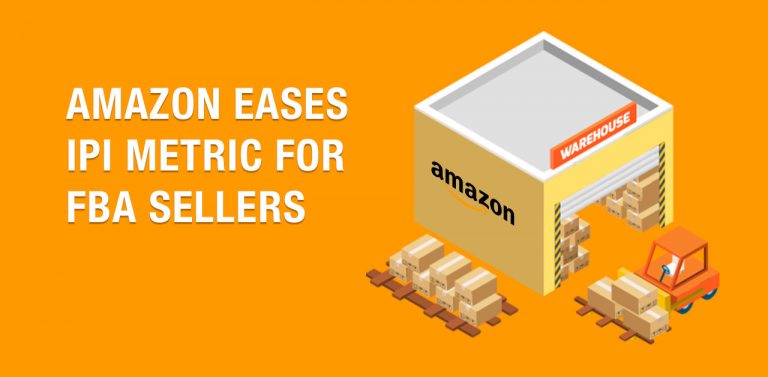
In recent weeks, Amazon has further eased restocking restrictions for sellers. Additionally, starting January 1, 2022, the Inventory Performance Indicator Score (IPI) threshold for FBA warehousing restrictions on Amazon US, UK, Europe (Germany/France/Italy/Spain), and Japan will be lowered to 400.

The above adjustments to the Inventory Performance Indicator Score (IPI) will reduce the percentage of sellers with limited storage capacity to less than 10%.

Amazon U.S., U.K., European warehousing policy:

While you may not be limited by logistics and warehousing, inventory management is still one of the core aspects of running your Amazon store. JiuFang recommends that you maintain the inventory turnover rate in real time, so that the inventory is not redundant and continuous.

Beginning April 1, 2022, if a seller continues to send the following 3 shipments to the Amazon fulfillment center, the shipment may be rejected, and Amazon may suspend the seller’s ability to send other shipments to the Amazon fulfillment center Permissions:

  1. The seller deletes the shipment after approving the inbound plan
  2. The shipment is sent to the wrong Amazon fulfillment center
  3. The seller sends an incomplete shipment, for example: a shipment in a “Canceled” or “Deleted” status

To avoid rejection of your shipment, please:

  1. When creating a shipping plan, identify the number of shipments to be shipped, their volume, and other information that may affect shipment allocation
  2. After approval of the inbound plan, be sure to ship the shipment to the Amazon fulfillment center as specified in the plan.Note: The specified quantity of each shipment in the plan needs to be sent to the designated Amazon fulfillment center in one-to-one correspondence
  3. After approval of the multi-destination inbound program, do not delete or misroute the shipment or parts of it, and ensure that all shipments arrive at Amazon fulfillment centers within 30 days. Note: If Amazon fulfillment centers do not receive all shipments under the program within 30 days, Amazon will promptly notify. *Except if one or more of your shipments are delayed due to the unilateral action or negligence of an Amazon-partnered carrier
  4. Make sure your shipment number label is clearly visible
  5. Communicate and cooperate with your carrier to ensure your shipment is delivered to the address on the shipping label. NOTE: If you identify your fulfillment center location by zip code, be sure to print the correct address on the shipping label


What are the benefits of RCEP for cross-border e-commerce

By Dyrus | January 07, 2022

What are the benefits of RCEP for cross-border e-commerce?

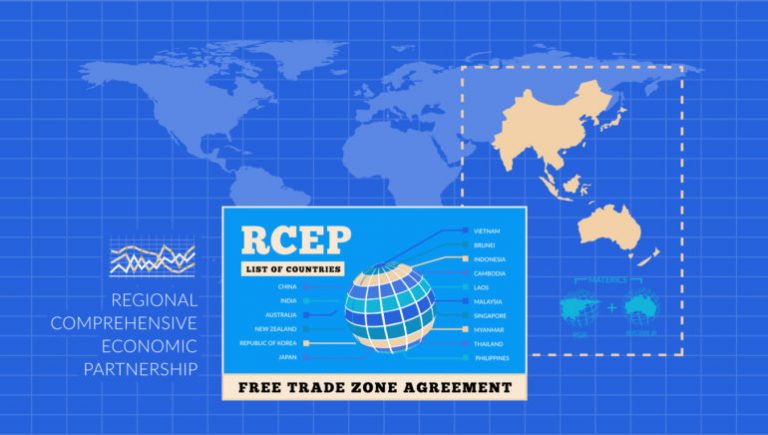
“Regional Comprehensive Economic Partnership Agreement” officially entered into force Just after midnight on New Year’s Day in 2022, at the RCEP pilot innovation test base in Qingdao, Shandong, my country’s single window for international trade has launched the RCEP certificate of origin application module, and other member states in the region have also started to issue RCEP certificates of origin simultaneously. This means that the free trade agreement with the largest population, the largest scale of economy and trade, and the most development potential in the world-the Regional Comprehensive Economic Partnership Agreement has been officially implemented.
From now on, companies can click on the application module to enter the RCEP certificate of origin declaration interface and enjoy RCEP’s tariff reduction.
In the early morning of January 1st, at the RCEP Pilot Innovation Test Base in Qingdao, Shandong Province, the customs officers of Qingdao Customs issued the RCEP certificate of origin for a batch of calcium chloride exported to Japan. This is also the country’s first RCEP origin certificate. Certificate of origin. With this certificate, the export company can save nearly 10,000 yuan in taxes with just this batch of goods.
Liu Kun, Business Manager of Shandong Qingdao Gulf Group Co., Ltd.: Previously, the tax rate levied on imports of products in Japan was 3.3%. After RCEP took effect, its tariff became 3%. The tariff on this product will be reduced to 0 year by year in the subsequent implementation of RCEP. Therefore, after a comprehensive calculation, the tariff reduction that we can enjoy for Japanese exports in the first year is about 1 million yuan.
According to customs statistics, in the first 11 months of 2021, the total value of China’s imports and exports to the other 14 RCEP member states was 10.96 trillion yuan, accounting for 31% of my country’s total foreign trade value. After the agreement enters into force, the largest reduction in tariffs will be imported machinery, plastic products, electrical machinery and electrical equipment, as well as exported textiles, luggage, and plastic products.

Bi Haijun, Director of Customs Tariff Department of Qingdao Customs: After the completion of the tax reduction process, about 90% of the products can enjoy zero tariffs. In 2022, Shandong’s export products can enjoy a tariff reduction of 380 million yuan in the region; after the completion of the tax reduction process, Shandong’s imported products can reduce tariff costs by about 900 million yuan.

90% of goods traded products in the region will have zero tariffs, After the RCEP takes effect, the tariffs on many imported consumer goods will be reduced, and our ordinary consumers can enjoy the benefits of the entry into force of the agreement. So, which imported goods have lower tariffs?
Fang Hui runs a store in the Imported Goods City of Yiwu, Zhejiang. The store mainly sells imported fresh-keeping boxes, kitchenware, cleaning supplies, etc. Fang Hui told reporters that more than 80% of the goods in the store can enjoy RCEP tariff concessions. So she hurriedly added orders with foreign sellers.

Fang Hui, an operator of China Import Commodity City in Yiwu, Zhejiang: For example, the retail price of this Xueping Pan is 258 yuan. After enjoying the RCEP tariff preferential policy, the retail price can be reduced by 40 yuan. There is also a bowl rack drain basket. The retail price of is now 105 yuan, after enjoying the RCEP tariff preferential policy, its price can drop by about 20 yuan.
It is understood that after the agreement comes into effect, the immediate zero-tariff ratio between my country and ASEAN, Australia, and New Zealand will exceed 65%. In 2022, 24.9% of China’s products will be open to Japan with zero tariffs, and 55.5% of Japan’s products will be opened to China with zero tariffs, and more products will be reduced in tax year by year.
Cao Zhongying, Section Chief of the Second Comprehensive Business Section of Yiwu Customs under Hangzhou Customs: After the RCEP is fully effective, zero-tariff products in goods trade in the region will reach about 90%.

Cui Fan, professor of the School of International Economics and Trade, University of International Business and Economics: Like speakers and American ginseng, zero tariffs are implemented in the first year, which will have a certain impact on prices. However, the tax reduction of most products is a gradual implementation process, such as electric ovens and microwave ovens. The 15% tariff is gradually implemented in 10 years. After 10 years, it will become zero tariff. Some products are less expensive in the final consumer price. It takes a process to reflect.
The RCEP agreement reduces the tariff cost of cross-border trade between member parties. Among them, the traditional high-tax rate industries are the most affected, such as food, agriculture, consumer goods and automobiles. In the future, consumers will buy Japanese cars, Australian skin care products, New Zealand honey, and Malaysian fruits at cheaper prices.

Standards are more unified and communication is more convenient, Not only is tariff reduction, RCEP also brings a more unified standard and a more convenient environment for the circulation of elements. Tu Xinquan, Dean of the China Institute of World Trade Organization of the University of International Business and Economics, said that my country has become a contracting party to the same agreement with Japan, Southeast Asia and other countries, and the rules of origin, customs procedures, inspection and quarantine, technical standards, etc. will be unified, which will create stability for companies in various countries. , Freedom, Convenience and Interconnected Quality Business Environment.

The certificate of origin is a certificate of the “nationality” of the goods, and an important certificate for exporting enterprises to enjoy preferential treatment such as tariff concessions in the importing country. With the entry into force of the RCEP agreement, the customs will issue certificates of origin for enterprises, and enterprises can enjoy RCEP tariff reductions by virtue of the certificates of origin.
In order to allow enterprises to better enjoy the policy dividends of the RCEP agreement, the customs has vigorously promoted the approved exporter policy, that is to say, enterprises that meet the relevant qualifications approved by the customs can independently issue a declaration of origin without applying for a certificate of origin from a visa agency , Enterprises can arrange production and export more flexibly.
In addition, a highlight of the RCEP agreement is the cumulative rules of origin. Products and raw materials originating in member states can be accumulated and included in the final product as originating ingredients. ASEAN countries can use the RCEP accumulation rules to order parts and components from Chinese automakers for domestic vehicle manufacturing, which will also greatly expand the automakers’ parts export market.



1.1 billion euros! Amazon is getting a high-priced government fine.

By Dyrus | December 30, 2021

The Italian competition authority AGCM (Autorità Garante della Concorrenza e del Mercato) ruled on December 9 that Amazon abused its e-commerce dominance by providing unfair sales and logistics preferential conditions to merchants using its own FBA e-commerce logistics service, harming The interests of other competing logistics companies in Italy violated EU regulations. In addition to fines, the authorities also implemented specific “behavioral measures” against the company’s commercial activities. Amazon said it would appeal this decision and the huge fine of 1.13 billion euros that followed.

AGCM stated that Amazon has provided exclusive sales and marketing offers to merchants who have registered for its FBA service in the Italian market. “Non-FBA sellers are subject to strict performance indicators, which may cause the accounts of non-compliant sellers to be suspended on Amazon.it. Third-party sellers using FBA are not monitored by the platform.”

In addition, AGCM also stated that the highly competitive online market has also been damaged by Amazon’s abuse of its dominant position. “Due to the cost of repetitive warehouses, sellers using FBA are not encouraged to offer their products on other online platforms.”

In terms of logistics, Amazon occupies a dominant position in the Italian logistics intermediary service market, which in itself is conducive to enabling sellers active on the Amazon.it platform to adopt their own Fulfillment by Amazon (FBA) logistics services. In addition to allowing corresponding merchants to participate in high-profile sales activities, such as Prime Day, Black Friday and Cyber ​​Monday, and increasing the possibility of being displayed first, Amazon’s Prime “free” delivery service for merchants also further provides consumers with purchase incentives. The survey shows that these are essential for merchants to gain popularity on the Amazon.it platform, promote sales, and make successful quotations on the platform.

“These unfair sales and logistics preferential conditions have harmed competing e-commerce logistics operators and prevented them from showing online sellers the logistics services that they can provide as a service provider with the same quality as Amazon’s FBA. The gap between market power and e-commerce package delivery has further widened.” AGCM further explained.

In view of the scale of Amazon, the duration of the relevant conditions and the scale of the merchants involved, AGCM described Amazon’s situation as “particularly serious.” In order to immediately restore the competitive conditions in the relevant market, AGCM imposed very severe fines and implemented “behavioral measures”: In terms of sales, Amazon must grant sales to all third-party sellers who can comply with “fair and non-discriminatory standards” to fulfill orders Preferential; in terms of logistics, Amazon should define and publish such standards, and within one year from the date of the decision, the seller shall not negotiate with carriers and/or competing logistics operators other than FBA on the logistics of the seller’s order.

The AGCM’s ruling was made in the EU-level antitrust investigations under the European Commission’s ongoing “Whether Amazon’s use of merchant data violates EU rules” and “Whether the company provides preferential treatment to sellers using its Amazon logistics and delivery services” Made before the decision. These two FBA-related investigations were launched in November 2020, paying particular attention to whether the standards set by Amazon will result in preferential treatment for Amazon’s retail business or sellers who use FBA and delivery services.

According to international media reports, Amazon expressed “strongly opposed” this decision and will appeal. It described the fines as “unreasonable and disproportionate” and claimed that Italian SMEs have many options to sell products online and offline. The company emphasized that FBA is a “completely optional service” and pointed out that third-party sellers can use its seller-delivered Prime (SFP) service, which allows them to get Prime benefits without using FBA.