Logistics News

Walmart Price Cuts Add Cost Pressure for China-to-USA Sellers

By JiuFang Logistics
July 7, 2026

What Happened

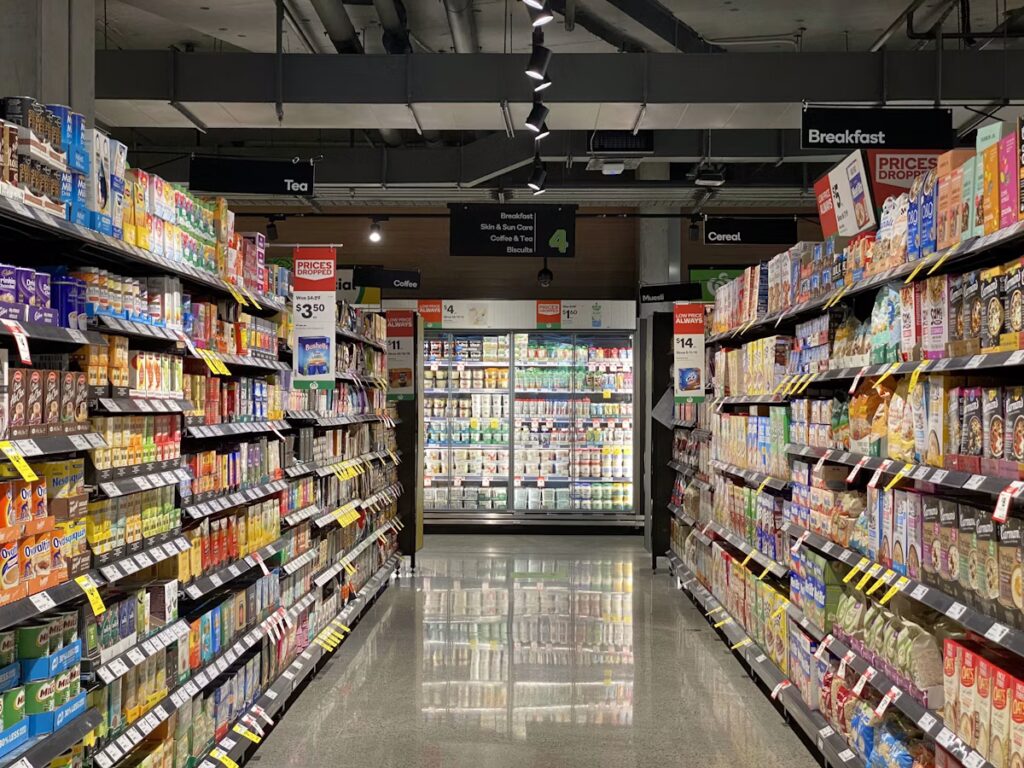
Walmart announced broad price cuts in the United States on July 6, covering thousands of items across grocery, household goods, toys, apparel and seasonal products. Associated Press reported that Walmart and Sam’s Club described the rollbacks as a summer-season move for customers.

The Wall Street Journal reported that the cuts include lower prices on ground beef, cherries, Coca-Cola and other products, and that Walmart has emphasized cost-control policies such as lower tariffs and fuel prices when discussing affordability with federal officials.

Why It Matters for China-to-USA Shipping

Walmart’s pricing moves matter for China-to-USA ecommerce and import suppliers because the retailer sells high volumes of household goods, toys, apparel and seasonal products. Lower retail prices can raise pressure on suppliers and marketplace sellers to protect margins while keeping inventory available.

For China-origin goods, landed cost becomes more important. Freight rates, customs duties, storage fees and last-mile costs all affect whether sellers can support lower shelf prices without losing margin.

Seller Impact

China-based suppliers and Walmart marketplace sellers should review pricing, replenishment timing and fulfillment capacity. Fast-moving discounted products may need earlier booking, split shipments or US-based inventory to avoid stockouts.

Accurate customs documentation also matters. Delays at clearance can reduce the benefit of a promotion if goods arrive after demand peaks or miss seasonal sales windows.

Shipping Outlook

Walmart’s price cuts are not a shipping rule change, but they are a demand and margin signal. Sellers shipping from China to the United States should focus on predictable transit, clean import data and tighter landed-cost planning.

Sources


Amazon Australia Prime Day Extends China-to-Australia Ecommerce Demand

By JiuFang Logistics
July 6, 2026

What Happened

Amazon Australia Prime Day 2026 starts on July 7 and runs through July 13, making it a seven-day sales event. TechRadar reported on July 3 that early deals were already available before the official start.

The event covers categories including electronics, home appliances, beauty, fashion and Amazon devices. Getprice reported that Amazon Australia offers more than 200 million products across more than 30 categories.

Why It Matters for China-to-Australia Shipping

A longer Amazon sale window can stretch demand for ecommerce inventory, especially for sellers sourcing from China. Products tied to tech accessories, home goods, fashion and small appliances often depend on predictable cross-border replenishment before and during major marketplace events.

For China-based exporters and Amazon sellers, the key logistics pressure is timing. Inventory that misses the pre-sale window can lose ranking, sales velocity and delivery reliability during peak traffic.

Amazon Seller Impact

Sellers shipping from China to Australia should review stock levels, transit times and last-mile delivery promises. Fast-moving Prime Day items may need earlier replenishment, split shipments or local fulfillment to avoid stockouts during the seven-day promotion.

The extended event also increases the importance of accurate customs data and product classification. Delays at clearance can reduce the value of promotional pricing if goods arrive after demand peaks.

Outlook

Amazon Australia’s longer Prime Day points to stronger mid-year competition in ecommerce. For China-to-Australia sellers, the practical response is tighter inventory planning, earlier shipment scheduling and more reliable fulfillment support.

Sources


CPSC Recalls Multiple China-Made Products Sold on Amazon

By JiuFang Logistics
July 3, 2026

What Happened

The U.S. Consumer Product Safety Commission issued several July 2, 2026 recalls and safety warnings involving China-made consumer products sold through Amazon or other U.S. e-commerce channels.

The products covered toys with accessible button cell batteries, nursing pillows, baby loungers, lithium coin batteries and pool drain ports. The cases show that product safety documentation is now a core issue for cross-border e-commerce, not only a post-sale customer service issue.

Amazon Products Named by CPSC

CPSC recalled about 62,490 POPOOO Jungle Safari LED Finger Lights sold on Amazon because children could access button cell batteries. The retailer was Shenzhen Bopu Product Design Co., Ltd., dba POPOOO, of China.

CPSC also recalled 4,008 AMASKY Nursing Pillows sold on Amazon by Xishentang Dongguan Trading Co., Ltd., dba Pretty-Life, of China. The products violated mandatory standards for nursing pillows and infant support cushions.

Junpower CR2032 lithium coin batteries sold on Amazon by JSNJ_Tech Store were recalled because the packaging was not child-resistant and lacked required warnings under Reese’s Law. The importer was Changzhou Niujie Battery Technology Co., Ltd., dba JSNJ_Tech, of China.

Other July 2 actions included VEVOR baby loungers sold on VEVOR.com, Amazon.com and Wayfair.com, and Topyond pool drain ports sold on Amazon by Changsha Jiali Duo Technology Co., Ltd., dba Topyond, of China.

Why It Matters for China-Based Sellers

China-based sellers shipping to Amazon FBA, U.S. private warehouses or direct U.S. customers should treat CPSC compliance as part of the shipment planning process. Regulated products can face recalls, listing removals, refunds, platform enforcement and customs delays if safety records are missing or inaccurate.

High-risk categories include toys, children’s products, infant sleep products, button or coin batteries, lithium battery goods and pool or outdoor safety products.

Shipping and Compliance Actions

Before shipping from China to the United States, sellers should confirm whether each SKU needs a Children’s Product Certificate, General Certificate of Conformity, test report, tracking label, warning label, battery packaging documentation or other safety file.

Freight planning should include compliance checks before cargo leaves China. Sellers should align product data, HS codes, supplier records, test reports and Amazon compliance submissions before booking air freight, ocean freight, Amazon FBA replenishment or small parcel delivery.

Sources


Amazon to Show Import Charges as EU €3 Parcel Fee Begins

By JiuFang Logistics
July 2, 2026

What Happened

The European Union started a €3 fee on low-value e-commerce parcels imported from China on July 1, 2026, according to Reuters. The fee applies to parcels that previously entered the EU duty-free under the €150 low-value import threshold.

Reuters reported that the EU recorded 5.8 billion sub-€150 e-commerce shipments in 2025, up from 1.4 billion in 2022, with the surge linked to platforms and sellers using direct-to-consumer parcel shipping from China.

Amazon's Response

Amazon, which launched Amazon Haul as a low-cost shopping service to compete with Shein and Temu, said 97% of its EU shipments last year were fulfilled from warehouses inside the bloc, according to Reuters.

For products shipped from outside the EU, Amazon said customers would be shown import charges before checkout. This makes landed cost more visible to buyers before they complete a purchase.

Why It Matters for China-Based Amazon Sellers

China-based sellers using Amazon Europe should review whether their products are fulfilled locally in the EU or shipped directly from China or another non-EU country. Products shipped from outside the EU may become less competitive if import charges are shown during checkout.

The change affects pricing, conversion rate, margin planning and delivery promises for low-value products. Sellers should also review HS codes, product descriptions, declared values, VAT handling and IOSS-related data.

FBA and FBM Fulfillment Actions

Amazon sellers should compare direct FBM parcel shipping with bulk replenishment to Amazon FBA Europe or local EU warehouses. For repeat-selling SKUs, local stock can reduce checkout friction and avoid parcel-level import charges being shown to customers at delivery or checkout.

For urgent inventory, sellers may still use air freight from China to Europe. For stable-demand SKUs, ocean freight or consolidated air freight to EU fulfillment centers may lower per-unit logistics cost and improve delivery reliability.

Sources


EU €3 Duty Starts on Low-Value E-commerce Parcels from July 1

By JiuFang Logistics
July 1, 2026

What Happened

The European Union starts a temporary €3 customs duty on low-value parcels imported from outside the EU on July 1, 2026. The measure applies to e-commerce goods worth up to €150, including common online categories such as clothing, toys, electronics and other consumer goods.

The European Commission says the change is intended to improve fairness and safety in a market where millions of low-value parcels enter the EU every day.

How the New Duty Works

The €3 duty applies per item based on tariff classification, not simply per package. The temporary duty is scheduled to remain in place until July 1, 2028, when the EU’s broader customs reform is expected to replace it with normal customs duties by product type.

Reuters also reported that France is suspending its separate €2 charge on low-value packages from outside the EU as the EU-wide fee begins. A further EU administration fee is expected to raise the total charge to €5 from November.

Why It Matters for China E-commerce Sellers

The rule directly affects China-based sellers and platforms using direct parcel shipping into Europe, including business models similar to Shein, Temu and AliExpress. Low-value parcel economics will change because duty now becomes part of the landed-cost calculation.

Sellers that previously priced EU orders around duty-free direct shipping should review product margins, checkout pricing, VAT handling, customs data and return policies.

Shipping and Fulfillment Impact

Direct small parcel shipping may remain workable for some products, but the new duty increases the importance of correct HS codes, product descriptions, declared values and IOSS-related data.

For repeat-selling SKUs, China-based sellers should compare direct parcel delivery with bulk replenishment to EU warehouses, Amazon FBA Europe or third-party fulfillment centers. Consolidated air freight or ocean freight may reduce per-unit logistics pressure when parcel-level duty and handling costs rise.

Sources


CPSC Recalls China-Made Products Sold on Amazon and Walmart

By JiuFang Logistics
June 26, 2026

What Happened

The U.S. Consumer Product Safety Commission issued several recalls on June 25, 2026 involving products manufactured in China or sold by China-based sellers. The recalls covered toys, youth ATVs, LED party favors and lithium-ion power banks.

The cases show that product safety compliance remains a material risk for China-origin goods sold through U.S. e-commerce channels.

Products and Sales Channels

CPSC recalled Honlyne LED party favors sold on Amazon.com from June 2024 through December 2025 because accessible button cell batteries could pose serious ingestion hazards. About 13,400 units were affected, and the retailer was Huizhou Rongheng Network Technology of China.

CPSC also recalled Small Fish Montessori Busy Board toys sold on Amazon.com from March 2026 through May 2026 because magnets can detach and create a deadly ingestion hazard. The distributor was Lesonic Technology Co., Ltd., dba Small Fish, of China.

Another recall covered XW-A17 Electric Youth ATVs sold on Amazon.com and Walmart.com from October 2025 through December 2025. The products were manufactured by Yongkang Ruihe Metal Products Co. Ltd. of China and recalled for violating the mandatory ATV safety standard.

CPSC also recalled Super Off-Road 12,000 mAh Solar Wireless Power Banks manufactured in China because the lithium-ion battery can swell and overheat. About 7,400 units were recalled in the United States, with about 4,964 additional units sold in Canada.

Why It Matters for China-Based Sellers

For China-based sellers, the recalls highlight the need to verify product safety standards before exporting to the United States or Canada. Children’s products, battery-powered goods, toys, ATVs and other regulated consumer products can trigger recalls, refunds, listing removal and customs or platform scrutiny if compliance records are incomplete.

Sellers using Amazon FBA, Walmart WFS, private warehouses or direct parcel shipping should treat safety documentation as part of logistics readiness, not as a separate after-sales issue.

Shipping and Import Compliance Actions

Before shipping from China, sellers should confirm whether each SKU requires a Children’s Product Certificate, General Certificate of Conformity, test report, warning label, tracking label or battery documentation.

Importers should align product data, HS codes, supplier records, test reports and marketplace compliance files before booking air freight, ocean freight or small parcel shipments to the United States, Canada, Europe or Australia.

Sources


CPSC eFiling Rules Add New Import Compliance Step for China-to-U.S. Consumer Goods

By JiuFang Logistics
June 25, 2026

What Happened

The U.S. Consumer Product Safety Commission is preparing for mandatory eFiling of certificate data for many imported regulated consumer products. CPSC is highlighting that eFiling requirements begin July 8, 2026.

The rule affects importers of consumer products subject to CPSC certification requirements, including many children’s products and certain general-use consumer products sold through U.S. retail and e-commerce channels.

What Changes on July 8

For imported consumer products subject to CPSC certification, importers must electronically file certificate data as of July 8, 2026. Products entered from a Foreign Trade Zone are scheduled to come under the requirement on January 8, 2027.

CPSC says the eFiling program is a modern approach for filing certificate data and provides role-based guidance for importers, brokers and software developers.

Why It Matters for China-Based Sellers

China-based sellers exporting consumer goods to the United States should treat CPSC eFiling as a customs readiness issue, not only a product safety issue. If required certificate data is incomplete, inaccurate or unavailable at entry, shipments may face clearance delays or additional review.

Categories such as toys, children’s apparel, nursery products, lithium-battery consumer products and other regulated goods require closer review before shipment.

Shipping and Customs Impact

Importers, freight forwarders and customs brokers should confirm which SKUs require a Children’s Product Certificate, General Certificate of Conformity or other certificate data before goods leave China.

For e-commerce sellers shipping to Amazon FBA, Walmart WFS, U.S. overseas warehouses or private addresses, CPSC eFiling increases the need for clean product data, test reports, factory information, HS codes and responsible-party records before booking air freight, ocean freight or small parcel shipments.

Sources


China's May Exports Beat Forecasts as Tech Demand Lifts Shipments

By JiuFang Logistics
June 9, 2026

What Happened

China’s exports rose 19.4% year on year in May 2026, beating market expectations and accelerating from April’s 14.1% growth, according to Reuters and AP reports based on official customs data. Imports also rose 27.4% year on year.

The stronger-than-expected data followed a period of front-loaded overseas orders and strong demand for technology-related goods.

What Drove the Export Growth

Reuters reported that integrated circuit exports surged 111% and automatic data processing equipment rose 66.1%, supported by demand linked to AI infrastructure. AP also reported that exports to the United States increased 35% in May, the fastest pace since early 2021.

Despite the headline growth, Reuters noted weaker momentum in some consumer categories, including furniture, toys and footwear.

Why It Matters for China-Origin Freight

Stronger export data can signal near-term pressure on freight capacity from China, especially if orders were pulled forward or concentrated into a short shipping window. Importers shipping from China to the United States, Canada or the United Kingdom should expect booking lead times and rate stability to remain important planning factors.

The impact will vary by product category. High-value technology goods may support air freight and express demand, while larger replenishment shipments can add pressure to ocean freight and consolidated cargo services.

What Importers Should Do

Importers should confirm cargo readiness earlier, compare air and ocean options, and avoid assuming that spot freight quotes will remain stable during a stronger export cycle. E-commerce sellers shipping to Amazon FBA, Walmart WFS or private warehouses should update inventory plans before placing large replenishment orders.


How to find HS code - Online Seller

By John
July 19, 2022

Sharing is caring!

What is Harmonized System HS Code?

Harmonized System (HS) codes, accepted by most countries in the world, the HS code is an identification code for goods used in international trade. HS codes are administered by the World Customs Organization (WCO) and are used internationally by customs authorities and companies to identify goods.


HS code work for?

The customs code are used by customs authorities, statistical agencies, and other government regulatory bodies, to monitor and control the import and export of commodities through:

  • Customs tariffs
  • Collection of trade data (international trade statistics)
  • Rules of origin
  • Collection of internal taxes
  • Trade negotiations (e.g., the World Trade Organization schedules of tariff concessions)
  • Transport tariffs and statistics
  • Monitoring of controlled goods (e.g., wastes, narcotics, chemical weapons, ozone layer depleting substances, endangered species, wildlife trade)
  • Areas of Customs controls and procedures, including risk assessment, information technology and compliance.
  • Companies use HS codes to calculate the total landed cost of imported products and parts, and to identify selling and sourcing opportunities abroad.

Note:

If you don’t include the HS code on the commercial invoice and other shipping documents, you risk the receiver paying the wrong tax and could possibly delay the shipment.


Classification of HS code

It is organized logically by economic activity or component material. 

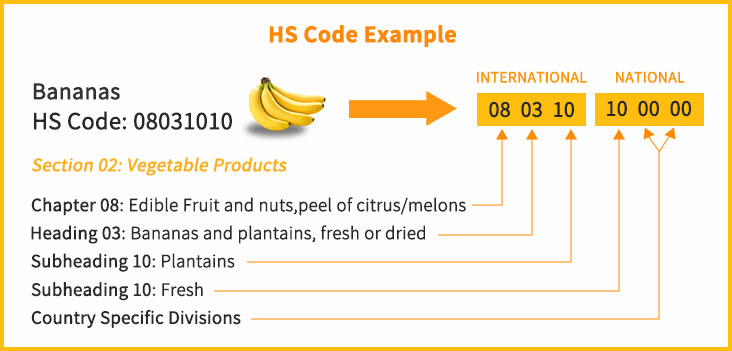
For example, animals and animal products are found in one section of the HS, while machinery and mechanical appliances are found in another. The HS is organized into 21 sections, which are subdivided into 99 chapters. The 99 HS chapters are further subdivided into 1,244 headings and 5224 subheadings.


One Step Find Your HS code

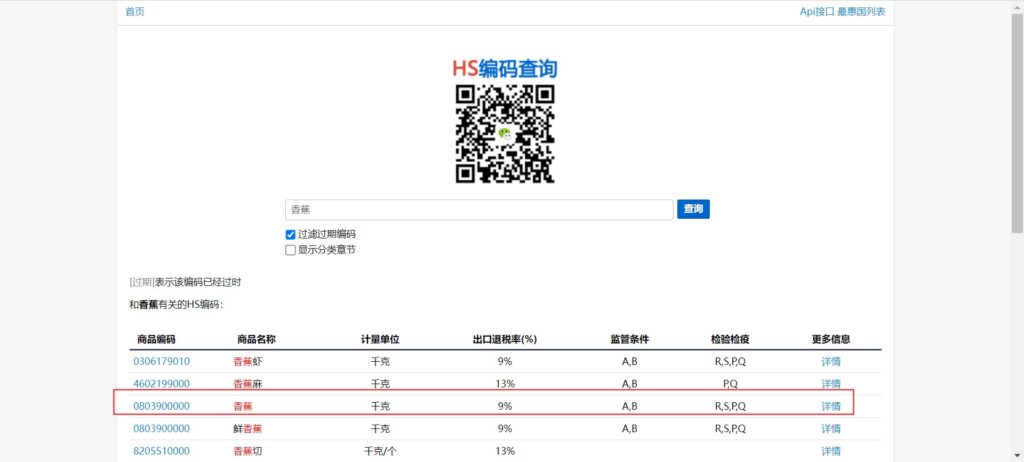
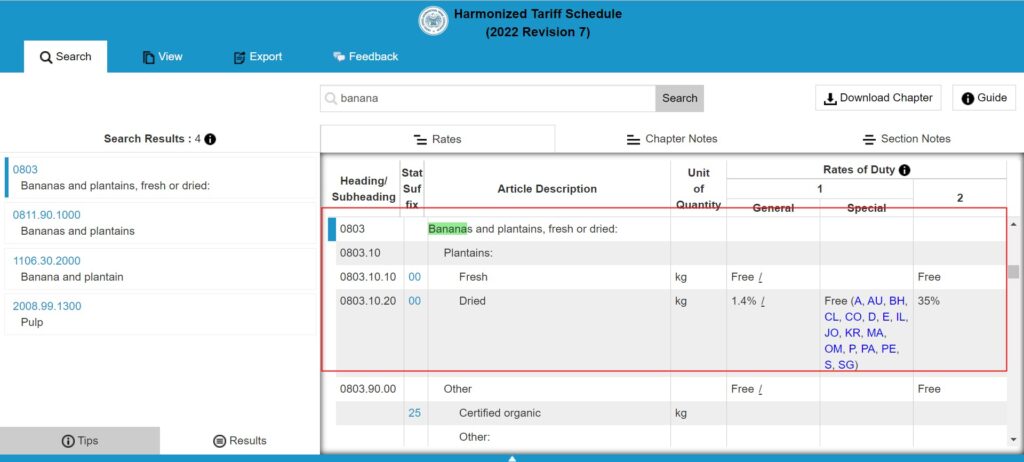
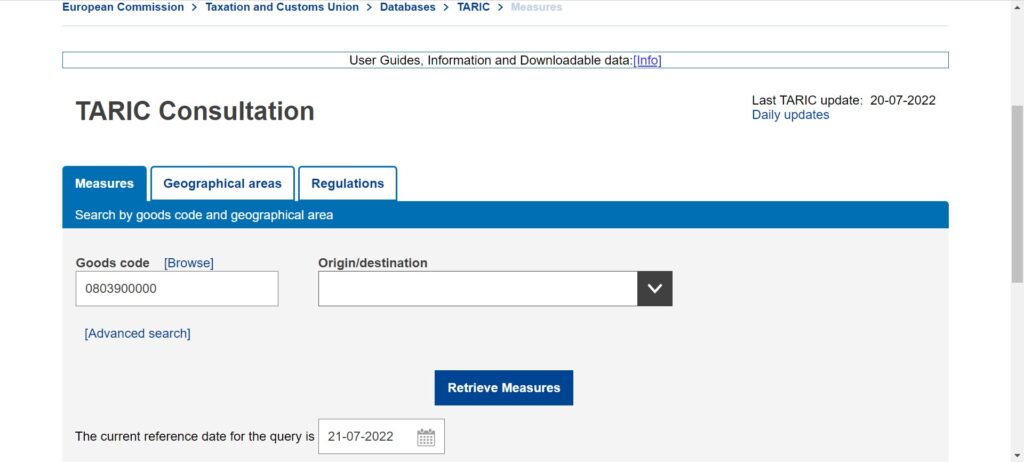
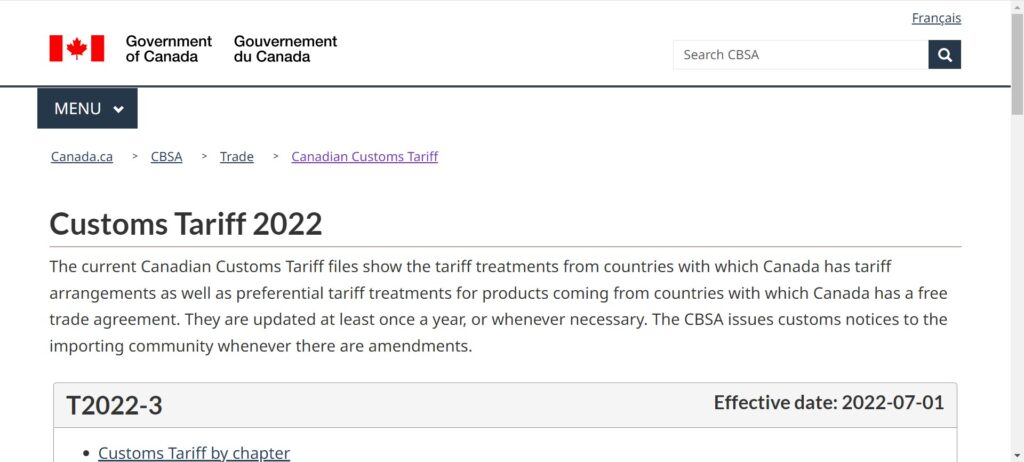
Enter the product name or product code to find the relevant detailed information, take the Banana as an example:

China HS Code:

Search Link: HS Search

US HTS Code

Search Link: HTS Search

US hs code

EU Taric Code

Search Link: Taxation and Customs Union 

EU hs code

Canada Tariff Code

Search Link: Canada customs tariff 2022

canada hs code

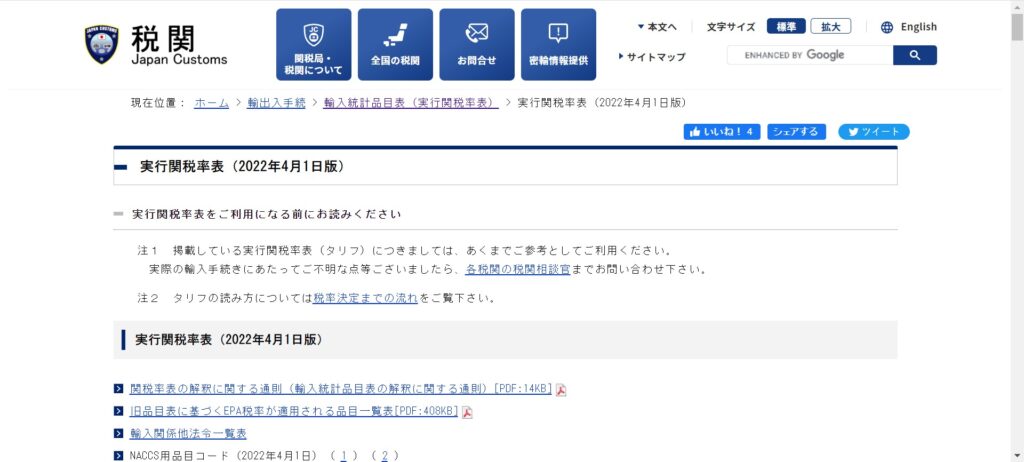
Japan HS Code

Search Link: Japan HS Search

japan hs code

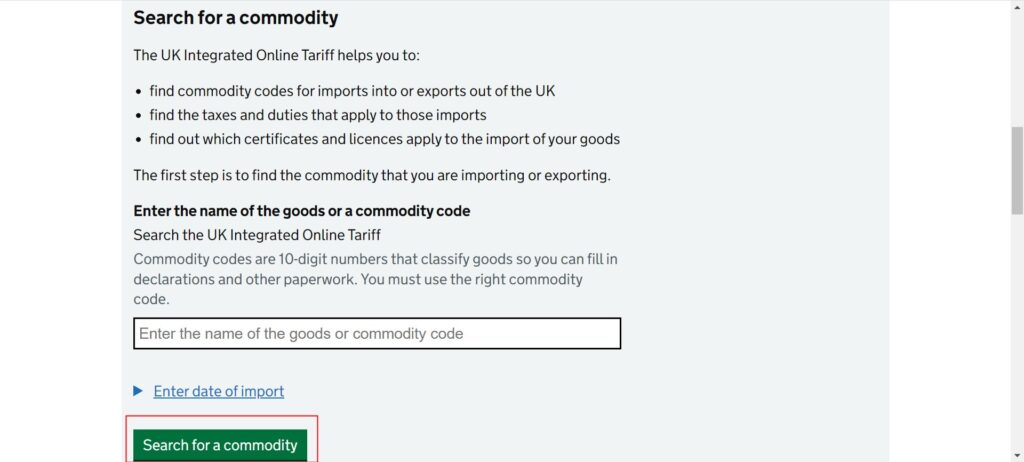
UK Tariff Code

Search Link: Tariff Code Search

UK hs code


How to Ship Directly to walmart WFS

Jiufang e commerce logistics customer review
By Lake
May 19, 2022

Sharing is caring!

What does WFS mean Walmart?

Walmart Fulfillment Services (WFS) is allows sellers to store their inventory at Walmart fulfillment centers. When a customer places an order on Walmart.com, we’ll pick, pack, and ship the item(s) to the customer on your behalf. WFS also handles all customer support and returns for these orders.


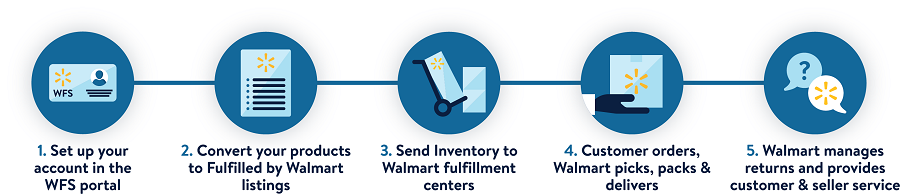
How does Walmart fulfillment work?

  1. Set up your account in the WFS portal
  2. Convert your products to Fulfillment by Walmart listings
  3. Send inventory to Walmart fulfillment centers
  4. Customers orders, Walmart picks & delivers
  5. Walmart manages returns and provides customer & seller service


What are the benefits of using Walmart WFS

Walmart fulfillment service (WFS) has the unique ability to provide sellers with the scale, quality, cost, and efficiency to grow a successful business on Walmart.com.

  • Exceptional service. Delight customers with fast delivery, easy returns, and quality customer service.
  • Cost-effective solution. Save on fulfillment with simple pricing and no hidden fees.
  • Full transparency. Track inventory, orders, and shipments with easy-to-read dashboards.
  • Increased site visibility. Gain higher search rankings and Buy Box prominence with Walmart TwoDay delivery tags.
  • Omnichannel success. Optimize your returns with our omnichannel Free & Easy Returns program.
  • Personal support service. Let us be your personal advisor on the next-generation fulfillment service.


How to ship your products to Walmart WFS

First, let’s take a look at what the seller needs to do in the background. 

Background operations:

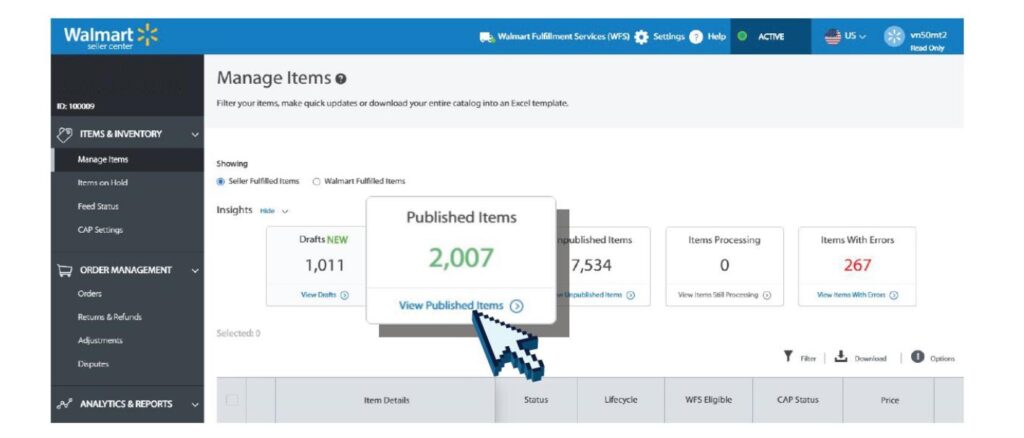
  • Select WFS products (select products sent to WFS on the “Manage Products” page in the seller’s back office).

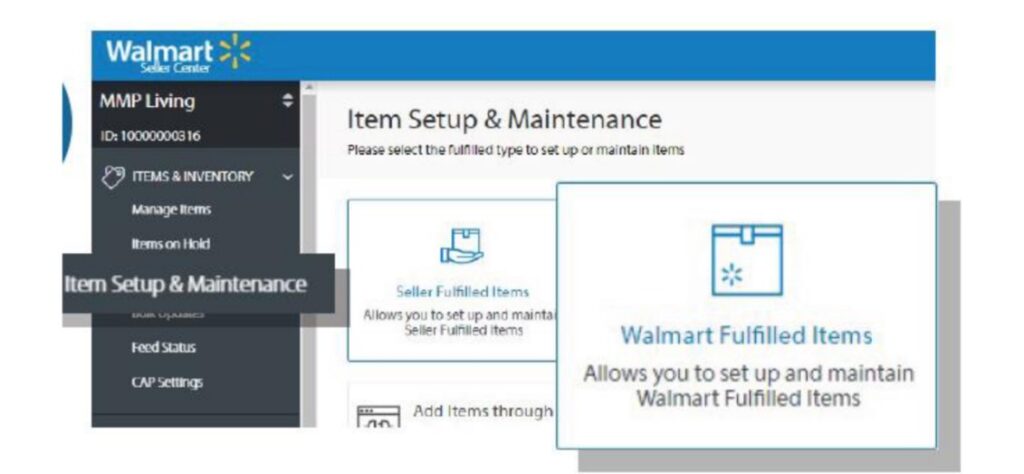
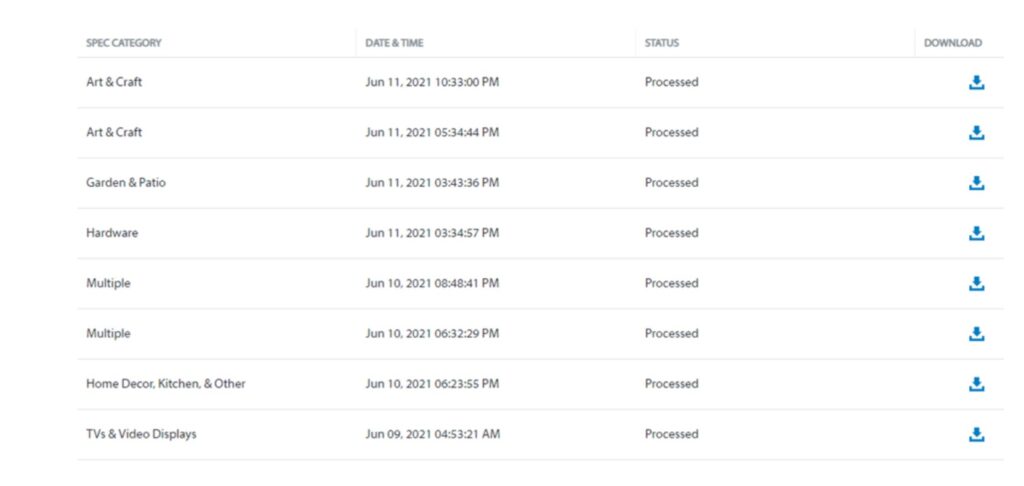
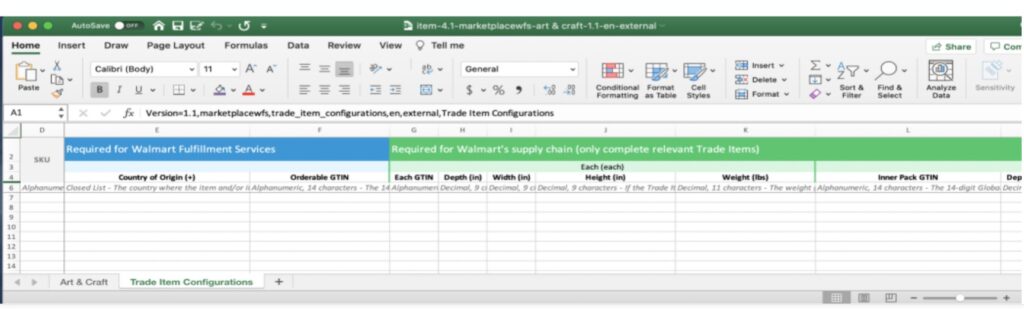
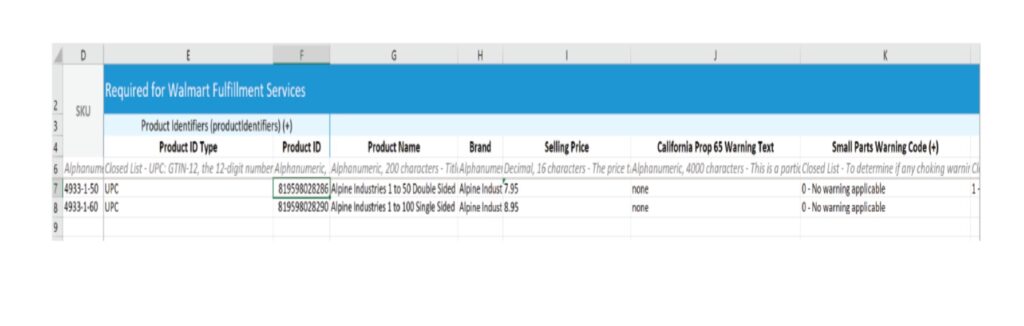
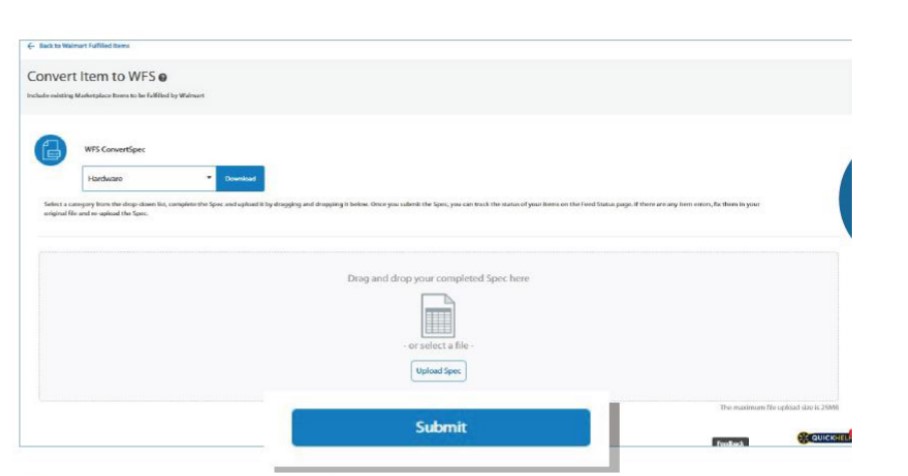
  • Convert WFS products (in the seller’s background, item Setup & Maintenance, select Walmart Fulfilled items, follow the steps, a form will be generated in the background, and the seller needs to download and fill in the supplementary information of the product before uploading it to the seller’s background).
  • Ready to ship (24 hours after uploading the form, download the warehousing order form on the Manage items page of the seller’s backstage, fill in and upload).
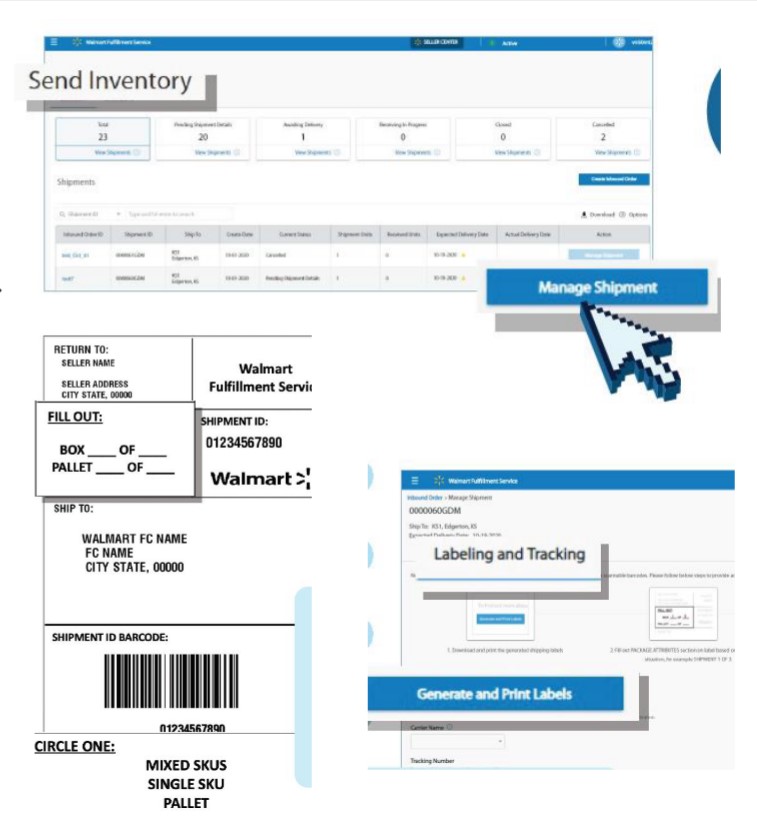
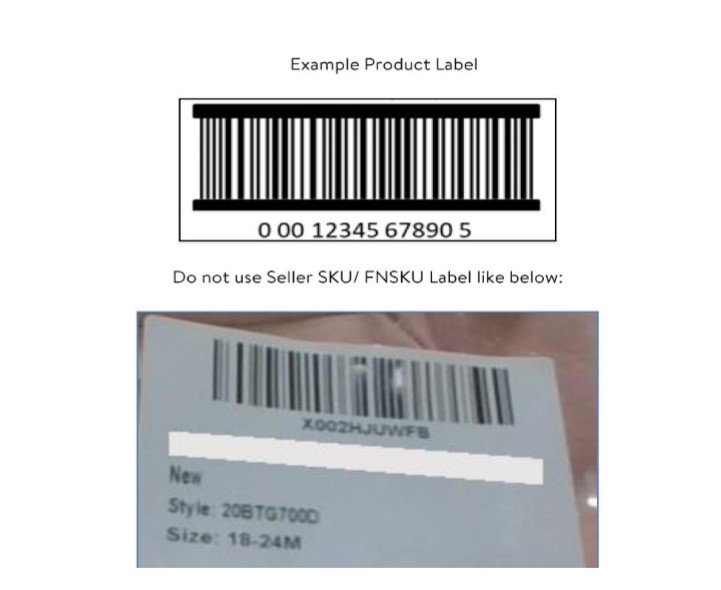
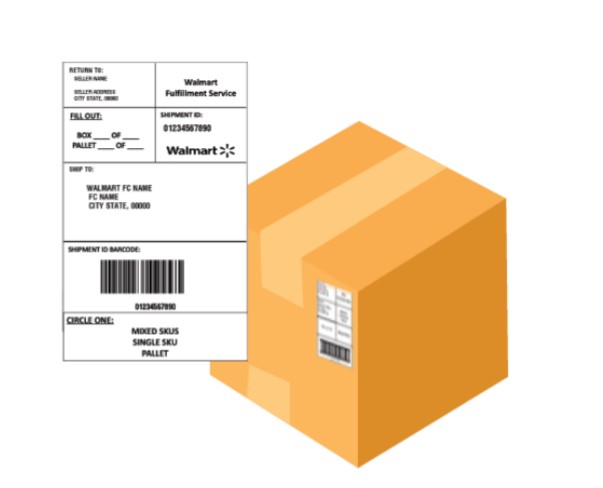
  • Shipping (Open the Routing Guide, select Generate and Print Label of Manage Shipment on the Send Inventory page, print out the label and paste it on the outer packaging of a single product, print the box label and paste it on the outer box label, and select the logistics provider for delivery)
  • Confirm the shipment (after the logistics provider confirms the delivery of the goods, the inventory can be checked in the background for up to 48 hours).


Additional

Before you can start shipping items to WFS fulfillment centers, you must be in good standing and live in Marketplace.

  1. Walmart WFS official website provide additional information.

  2. You can read Walmart fulfillment centers location in Jiufang Walmart Map Page.

We also have a fantastic video on How To Send Products To Walmart WFS. Check it out!