Logistics News

Fuel Surcharges Raise the Cost of Amazon FBA Inbound Delivery

By JiuFang Logistics
July 22, 2026

U.S. Parcel Costs Hit a Record

U.S. ground parcel costs remained elevated in the second quarter, Supply Chain Dive reported on July 20. The TD Cowen/AFS Ground Parcel Freight Index reached 42.4% above its January 2018 baseline, an increase of 6.9% year over year.

The index is expected to moderate to 38.7% above the baseline in the third quarter. Even at that level, the report said 2026 remains on track to record the highest cost per package in the index’s history.

Fuel Surcharge Pressure

The average net fuel surcharge per package increased 40% year over year in the second quarter. At diesel prices of $4.50 per gallon, FedEx and UPS ground fuel surcharges were running at roughly 24.5% to 25%, compared with 22.5% a year earlier.

Supply Chain Dive also reported that discounts for some FedEx and UPS shippers declined slightly in the quarter. Large and small customers may therefore receive different pricing outcomes.

Connection to the Amazon FBA Inbound Process

For China sellers, inbound shipping cost does not end at the U.S. port. After international freight and customs clearance, cartons still need inland or parcel delivery to the Amazon-assigned fulfillment center. Fuel surcharges and billed weight can change that final leg’s cost.

This matters when comparing a low ocean or air freight quote. The Amazon FBA inbound process should be priced from the China pickup point through delivery and receiving, including destination handling, domestic transport and any carrier surcharge.

Cost Planning for China Sellers

Sellers should request an all-in quote, confirm whether fuel is included and check the billed-weight rules before booking. A shipment split between fulfillment centers may also create additional domestic delivery charges.

The index report noted that Amazon Shipping and other Amazon Supply Chain Services could pressure parcel pricing over time. That potential competition does not remove the need to verify service coverage, delivery time and Amazon receiving requirements for each shipment.
Sources


DHL Adds Transpacific Air Capacity for Amazon FBA Shipping

By JiuFang Logistics
July 21, 2026

New Transpacific Air Service

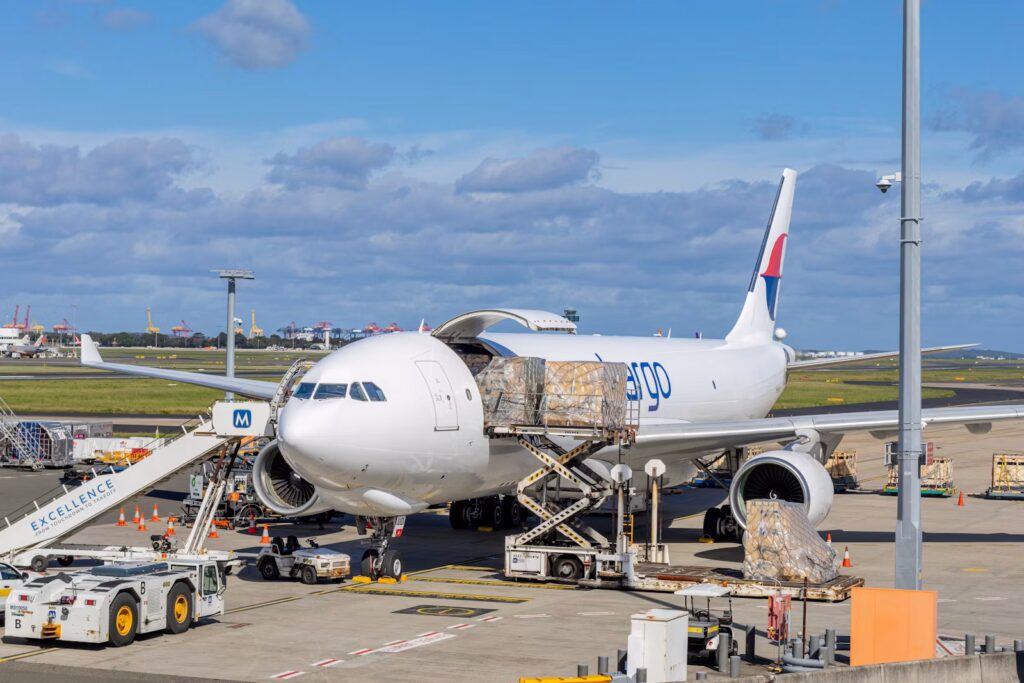
DHL Global Forwarding has expanded its transpacific air network with a dedicated service from Bangkok Suvarnabhumi Airport to its Cincinnati hub. Supply Chain Dive reported the development on July 15, within DHL’s broader effort to add controlled capacity between Asian manufacturing centers and the United States.

The route started operating on July 1. It complements DHL flights from Hanoi and Taipei to U.S. gateways including Chicago, widening the available network for time-sensitive cargo moving from Asia.

Schedule and Capacity

The Bangkok-Cincinnati service operates three times a week with a Boeing 777 freighter. Each flight provides 100 metric tons of cargo capacity. DHL said the dedicated operation is intended to give shippers more stable schedules and more predictable costs.

The aircraft can handle oversized and high-value shipments as well as standard air cargo. Technology products are a major source of current demand from Southeast Asia, according to DHL.

Impact on Amazon FBA Shipping

For Amazon FBA sellers, the added capacity creates another option for urgent replenishment into the United States when ocean transit is too slow. It may be useful for compact, high-value inventory, launch stock or products at risk of going out of stock.

The service does not depart from mainland China. China-based sellers would need inventory produced in Southeast Asia or a compliant regional consolidation plan before using the Bangkok gateway. Total cost should include origin trucking, export handling, U.S. customs clearance and delivery to the assigned Amazon fulfillment center.

Planning Priorities

Air capacity remains under pressure. Supply Chain Dive cited Xeneta data showing Asia-Pacific-to-North America demand rose 7% year over year in June, while transpacific spot rates jumped more than 40% from late February to the final week of June.

FBA sellers should compare the full landed cost of air freight against the sales and ranking risk of an inventory gap. Booking space before stock reaches a critical level leaves more room to choose between air, ocean and split-shipment strategies.

Sources


Transpacific Ocean Rates Ease for Amazon FBA Shipping

By JiuFang Logistics
July 21, 2026

Shanghai-US Rates Turn Lower

Transpacific container spot rates showed signs of easing in mid-July after climbing through the early peak season. The Loadstar reported on July 17 that Drewry’s Shanghai-Los Angeles rate fell 3% week over week to $6,272 per 40-foot container.

The Shanghai-New York rate was unchanged at $7,879 per 40-foot container. The mixed movement suggests the market is softening, but not uniformly across U.S. coasts.

More Transpacific Capacity

Xeneta data cited by The Loadstar showed offered capacity to the U.S. West Coast increased 6.5% from the previous week. Capacity to the U.S. East Coast rose 15.4%.

Analysts linked the rate change to carriers adding space while front-loaded demand began to ease. Importers had moved orders earlier to manage expected third-quarter fuel adjustments and wider supply chain disruption. That brought peak-season pressure forward into May rather than July.

Amazon FBA Shipping Costs

For sellers moving inventory from China to Amazon FBA warehouses, a weekly decline can improve new booking quotes, but it does not mean low-cost shipping has returned. Xeneta said Far East-to-U.S. West Coast spot rates were still 252% above their late-February level.

FBA shipping comparisons should use the complete landed cost: ocean freight, origin charges, destination handling, customs clearance, inland delivery and Amazon receiving deadlines. Sellers also need to match the port route with the fulfillment center destination before selecting a lower headline rate.

Near-Term Outlook

A sharp fall is not guaranteed. Drewry counted nine blank sailings scheduled for the following transpacific week, giving carriers a way to limit available space. U.S. tariff policy could also change booking demand quickly.

Amazon FBA sellers should treat the current decline as a booking window rather than a confirmed long-term trend. Comparing West Coast and East Coast options, checking sailing reliability and allowing time for FBA receiving remain central to inventory planning.

Sources


AI Refund Fraud Adds Risk to FBA Fee Calculations

By JiuFang Logistics
July 20, 2026

Returns Already Carry High Costs

U.S. retailers processed approximately $849.9 billion in merchandise returns in 2025, and about 9% were fraudulent, Practical Ecommerce reported July 16, citing the National Retail Federation and Happy Returns.

E-commerce recorded a 19.3% overall return rate, substantially higher than physical retail.

AI Expands Synthetic Evidence

Generative AI can create convincing photographs of cracked, stained or incomplete products. It can also fabricate damaged packaging, customer-service messages, carrier records and delivery screenshots used to support false refund claims.

The risk is higher when merchants approve low-value refunds remotely because return shipping and inspection would cost more than the product.

AI-Specific Losses Remain Unclear

The 9% fraud figure covers return fraud overall. Practical Ecommerce said there is no credible U.S. estimate for the share specifically assisted by AI, so sellers should not treat all fraudulent returns as AI-generated.

Manual review, extra photo angles and mandatory returns can reduce risk, but each control also adds support, shipping and inspection expense.

Add Expected Return Loss

FBA profitability models should include expected return cost per sale: return probability multiplied by the average net loss per return. The net loss can include non-resellable inventory, applicable Amazon return charges, removal or disposal costs and unrecovered shipping.

China-based sellers should calculate this by SKU and category. A low-margin product with a high return rate can become unprofitable even when its standard FBA fulfillment fee remains unchanged.

Sources


Air Cargo Rate Forecast Rises 5%-15% for FBA Sellers

By JiuFang Logistics
July 20, 2026

Xeneta Reverses Its Rate Forecast

Xeneta now expects long-term air freight contract rates to increase 5%-15% in 2026, FreightWaves reported July 17. The analytics firm had previously forecast a 5%-10% decline.

Combined spot and contract rates rose 17% year over year in the first half. Spot rates increased 22%, long-term rates rose 11%, and airline spot prices jumped 40% from May through June.

Capacity and Fuel Raise Costs

Middle East airspace and airport disruption initially removed more than 12% of global air cargo capacity, while higher jet fuel prices added further pressure. Xeneta expects full-year supply to grow about 2%, below demand growth.

June air cargo demand increased 7% year over year, supported by semiconductor and AI hardware shipments. AI-related products now represent about 10% of total air cargo volume.

China E-Commerce Air Demand Slows

China’s low-value e-commerce exports fell 7% year over year in May, the sixth consecutive monthly decline, according to Xeneta. New low-value import rules in the United States and European Union have weakened a major source of air cargo growth.

Update the FBA Fee Calculation

China-based FBA sellers should model the air freight portion of landed cost at three levels: current quote multiplied by 1.05, 1.10 and 1.15. Fuel, security and war-risk surcharges should remain separate where the forwarder does not include them in the base rate.

Total FBA cost per unit should include international freight, customs duty and tax, destination handling, Amazon inbound charges, storage and fulfillment fees. Air freight should be reserved for inventory where the avoided stockout cost exceeds the rate premium.

Sources


EU €3 Parcel Duty Changes FBA Fee Calculations for China Sellers

By JiuFang Logistics
July 17, 2026

€3 Duty Starts on Low-Value Parcels

The European Union began charging a €3 customs duty on July 1 for direct-import parcels valued below €150, The Register reported July 6. The measure ends the previous duty-free treatment for these low-value shipments.

EU data shows that 4.6 billion e-commerce parcels worth less than €150 entered the bloc in 2024, with 91% arriving from China.

The Charge Applies Per Tariff Line

The duty is assessed per product category in the customs declaration, not simply per parcel. A parcel containing several units under one tariff line incurs €3, while a parcel containing three different tariff lines incurs €9.

Product classification therefore directly affects the landed cost of mixed-item orders.

FBA and FBM Orders Are Covered

Amazon told sellers that the duty applies to FBA and FBM customer shipments sent directly from outside the EU to EU consumers. Amazon also said the charge does not apply when products are fulfilled from inventory already located inside the EU.

How to Calculate the New Cost

The €3 charge is a customs cost, not an Amazon FBA fee. For direct shipments, sellers should multiply €3 by the number of tariff lines and add VAT, transport, marketplace fees and any customs-processing costs.

For EU-based FBA inventory, the comparison should include bulk-import duty and VAT, international freight, Amazon inbound charges, storage and fulfillment fees. Consolidating inventory into an EU warehouse can avoid the new charge on each customer shipment, but it introduces inventory and storage risk.

Sources


Amazon Shipping Discounts Reshape FBA Fee Calculations

By JiuFang Logistics
July 17, 2026

Amazon Targets Parcel Volume

Amazon Shipping is offering U.S. parcel rates that match or undercut FedEx and UPS as it seeks more business customers, Supply Chain Dive reported July 9. Logistics platform Loop said eligible residential shipments saved clients as much as $6 per package.

For one large retailer, Amazon Shipping covered more than 90% of distribution and reduced annual parcel spending by over 33% compared with FedEx, according to Loop.

Fewer Delivery Surcharges

Amazon said its service has no residential surcharge or weekend delivery fee. Pricing experts also cited surcharge waivers and lower fuel surcharges as reasons quoted costs can be simpler than traditional carrier contracts.

The reported savings are customer-specific, not a universal rate reduction. Package weight, destination, volume commitment and existing carrier discounts still determine the final cost.

Service Limits Still Matter

Amazon Shipping currently provides two-to-five-day ground delivery in the contiguous United States. It does not offer the same range of overnight and specialized services as FedEx or UPS, making it most relevant to high-volume retailers shipping lightweight parcels.

How to Update the Fee Calculation

Amazon Shipping is not an FBA fulfillment fee. China-based sellers should use its parcel quote as an FBM benchmark when deciding whether to send inventory into FBA.

The FBA calculation should include international inbound freight, customs costs, Amazon inbound placement charges, storage and fulfillment fees. The FBM comparison should include pick-and-pack labor, the Amazon Shipping label, packaging, returns and any uncovered destinations. Sellers should compare total cost per delivered order rather than a single headline rate.

Sources


Asia Air Cargo Tightens as AI Shipments Compete With E-Commerce

By JiuFang Logistics
July 16, 2026

Two Cargo Segments Compete

AI-related data center equipment is competing with e-commerce shipments for limited freighter space on routes from Asia, the Journal of Commerce reported July 15. Air cargo tonnage from Taiwan to Europe increased 20% over the previous three weeks, driven mainly by computer equipment linked to AI demand.

Carriers Add Asian Capacity

Freighter capacity from Vietnam increased 30% from January through June, according to air freight consultancy Aevean. Capacity from Thailand rose 12%, while Taiwan recorded a 7% increase over the same period.

The additions have not removed the broader constraint because e-commerce and data center cargo require the same type of air capacity.

Rates Remain Elevated

Strong demand and limited space are keeping Asian air freight rates elevated. Time-sensitive e-commerce shipments must compete not only with other consumer goods but also with high-value technology cargo that can support premium transport costs.

Amazon FBA Planning

China-based Amazon FBA sellers using air freight for urgent replenishment should reserve space before inventory is ready and compare direct and regional gateway options. The figures cited cover Vietnam, Thailand and Taiwan, but the competition for Asian freighter capacity can also affect sellers routing cargo through regional hubs.

Air shipments should be reserved for inventory where the avoided stockout cost justifies the higher freight rate. Less urgent replenishment can move by ocean or rail where the destination permits.

Sources


Amazon and Chinese E-Commerce Lift UK Warehouse Demand

By JiuFang Logistics
July 16, 2026

UK Warehouse Demand Returns

UK industrial net absorption reached nearly 6 million square feet in the second quarter of 2026, its strongest result in more than three years, according to CoStar data released July 16. Twelve-month net absorption also returned to positive territory after reaching a 23 million-square-foot low in 2024.

Amazon Adds Major Capacity

Amazon took an estimated 6 million square feet of UK warehouse space over the past 18 months. That total includes a 2 million-square-foot facility at Segro Park Northampton, which opened in June, while a 900,000-square-foot site at Symmetry Park Kettering is scheduled to open this autumn.

Chinese E-Commerce Expands

Chinese occupiers had leased or placed under offer more than 2 million square feet by mid-2026, putting the segment on course for another record year. CoStar said Chinese e-commerce platforms are increasing domestic inventory and logistics space to support faster UK delivery.

Impact on Amazon FBA Sellers

For China-based Amazon FBA sellers, additional UK fulfillment capacity can support deeper local inventory, but it also signals stronger competition for well-located warehouse and delivery resources. Inventory plans should account for international transit, customs clearance, domestic storage and Amazon receiving time.

The expansion favors earlier replenishment decisions for products that depend on consistent UK delivery speed.

Sources


Amazon Expands Customs-Friendly China Warehouse Network for FBA Sellers

By JiuFang Logistics
July 15, 2026

Warehouses Near Chinese Ports

Amazon is building warehouses near major Chinese ports to attract exporters seeking more compliant access to the U.S. market, Nikkei Asia reported on July 15. The strategy comes as imported goods face closer scrutiny.

Shanghai Follows Shenzhen

A new facility near Shanghai port follows Amazon’s existing Shenzhen center, and another location is planned, according to Nikkei Asia. The network gives China-based sellers more options for staging U.S.-bound inventory before international shipment.

Focus on U.S. Customs Compliance

Port-adjacent storage can support cargo consolidation and earlier document checks, but it does not remove customs obligations. Sellers remain responsible for accurate product classification, declared value, origin information and required import documentation.

Impact on Amazon FBA Sellers

For Amazon FBA sellers, a broader China warehouse network can simplify bulk inventory planning and replenishment. Shipping schedules must still include export clearance, ocean or air transit, U.S. import clearance, inland delivery and Amazon receiving time.

The expansion signals that customs compliance is becoming a larger part of Amazon’s logistics offer to Chinese exporters.

Sources